May 29, 2026 | Guangzhou
A new book chapter by Chaofan and his colleague Ms Ruonan Li (Beijing Normal – Hong Kong Baptist University), titled Navigating Multilingual Stress and Cultural Adaptation: A Comparative Study of Mainland Chinese Students’ Psychological Well-Being in Hong Kong and Singapore, has been published online by Springer.
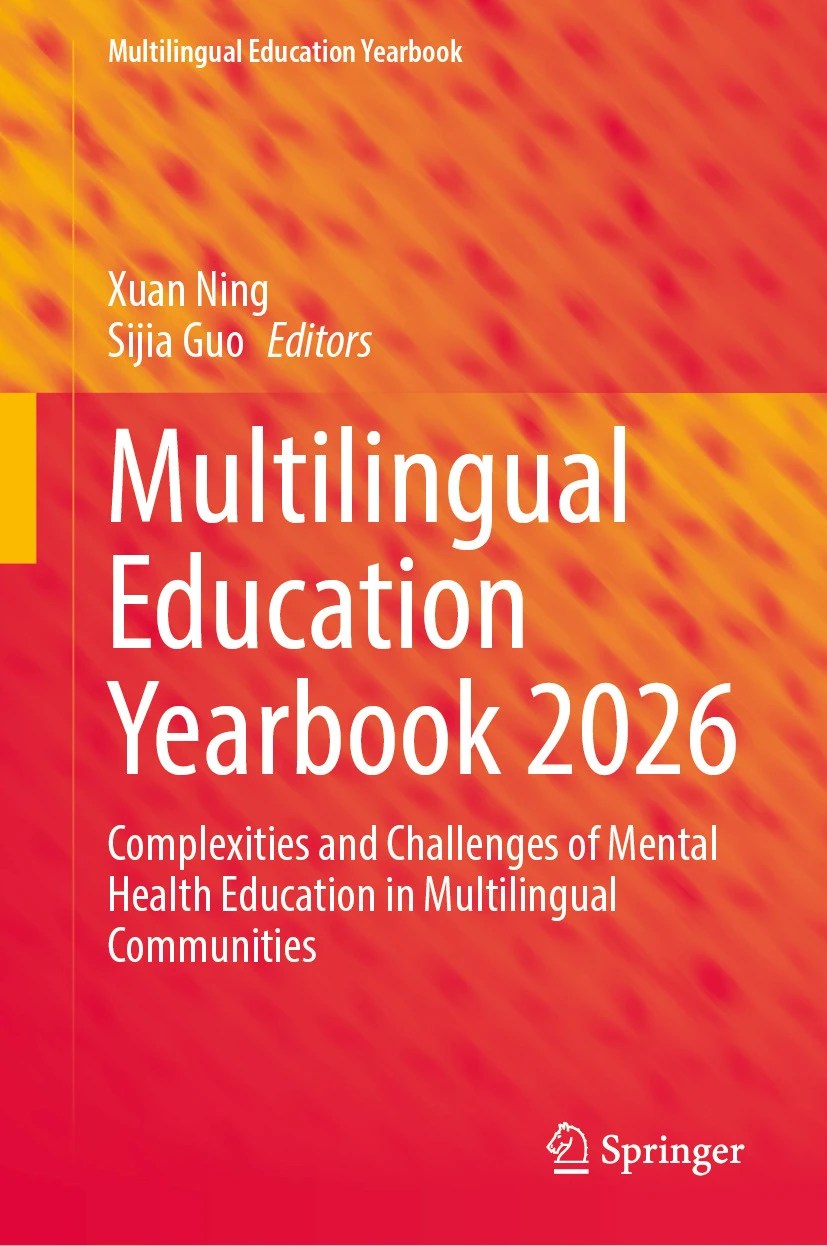
The chapter appears in Multilingual Education Yearbook 2026: Complexities and Challenges of Mental Health Education in Multilingual Communities, edited by Assoc Prof Xuan Ning (Beijing Normal – Hong Kong Baptist University) and Assoc Prof Sijia Guo (Dalian Maritime University) and published by Springer. The chapter is now available online with the DOI: 10.1007/978-3-032-20155-3_8.
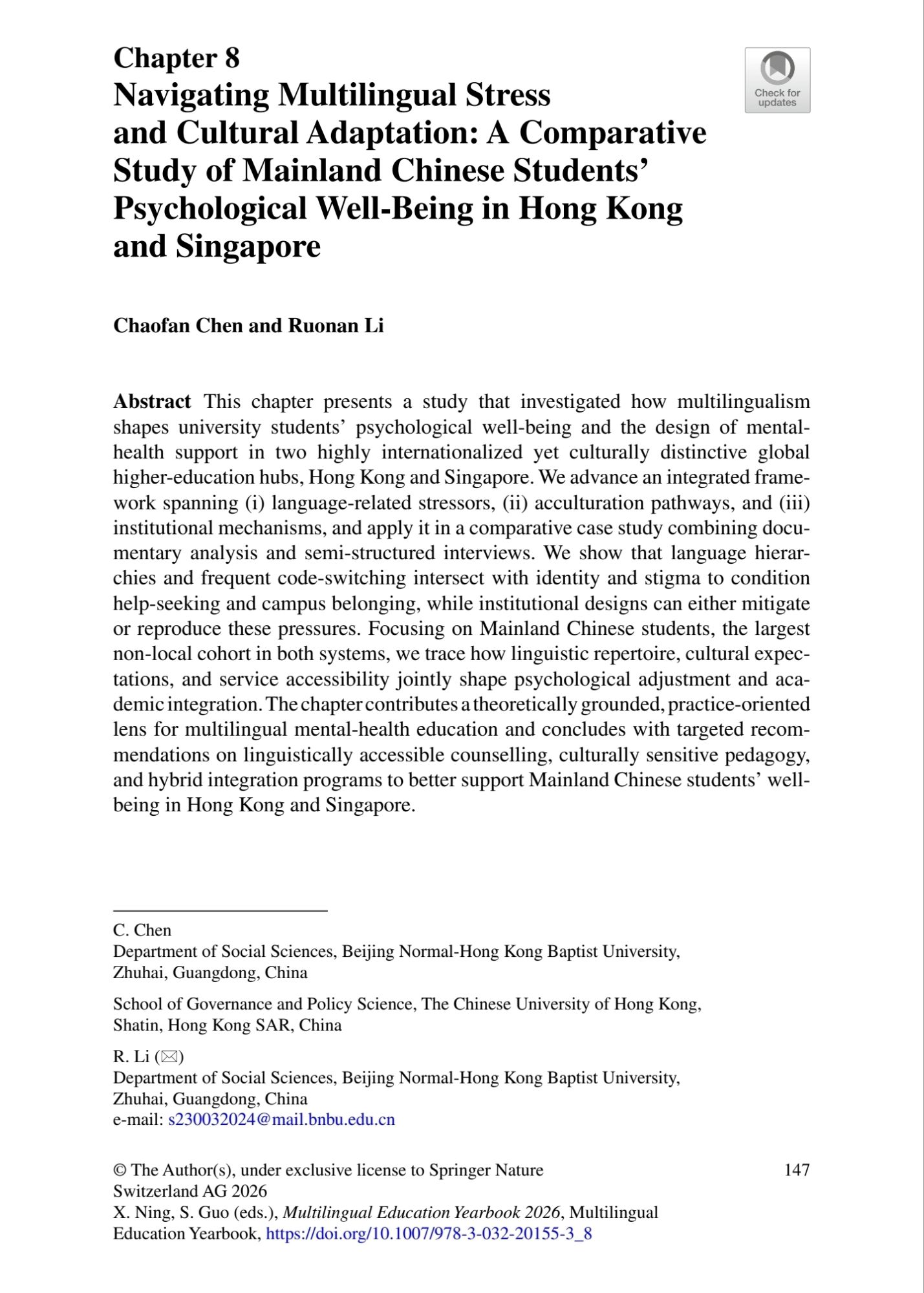
Focusing on Mainland Chinese students in Hong Kong and Singapore, the chapter examines how multilingual university environments shape students’ psychological well-being, help-seeking behaviour, sense of belonging and academic integration. Hong Kong and Singapore are both highly internationalised higher-education hubs, yet they differ in language ecology, institutional culture and social expectations. This comparative perspective enables the authors to explore how language-related stress, cultural adaptation and mental-health support intersect across two distinctive but closely connected Asian contexts.
The chapter advances an integrated analytical framework that brings together three dimensions: language-related stressors, acculturation pathways and institutional support mechanisms. Through documentary analysis and semi-structured interviews, the study shows that language hierarchies, code-switching practices, identity negotiation and stigma can shape how Mainland Chinese students experience campus life and access mental-health support. At the same time, institutional arrangements may either reduce these pressures or unintentionally reproduce them.
By linking multilingual education with student well-being, the chapter contributes to current discussions on inclusive higher education, international student support and culturally responsive mental-health education. It argues that psychological well-being in multilingual university settings cannot be understood only as an individual issue. Rather, it is also shaped by linguistic accessibility, cultural expectations, peer interaction, pedagogical practice and the design of counselling and support services.
The chapter concludes with practice-oriented recommendations for universities, including more linguistically accessible counselling services, culturally sensitive teaching and advising, and hybrid integration programmes that better support students’ academic, social and psychological adjustment.
This publication offers timely insights for scholars, educators, student-affairs professionals, counsellors and policy makers concerned with multilingual education, internationalisation and student well-being in Asian higher education.

 Chen Chaofan Frank
You must be logged in to post a comment.