
Hong Kong | April 14 2025
Chaofan’s guest essay on the recent tariff war initiated by US President Trump has been published on DotDotNews, an online news portal owned by Ta Kung Wen Wei Media Group.
You may read the full article here: https://english.dotdotnews.com/a/202504/14/AP67fc935fe4b0e343b0e6a8a2.html
Full article:
Opinion | Cost of protectionism: Untrustworthy US and broken international system
Opinion
2025.04.14 13:50
By Chen Chaofan Frank
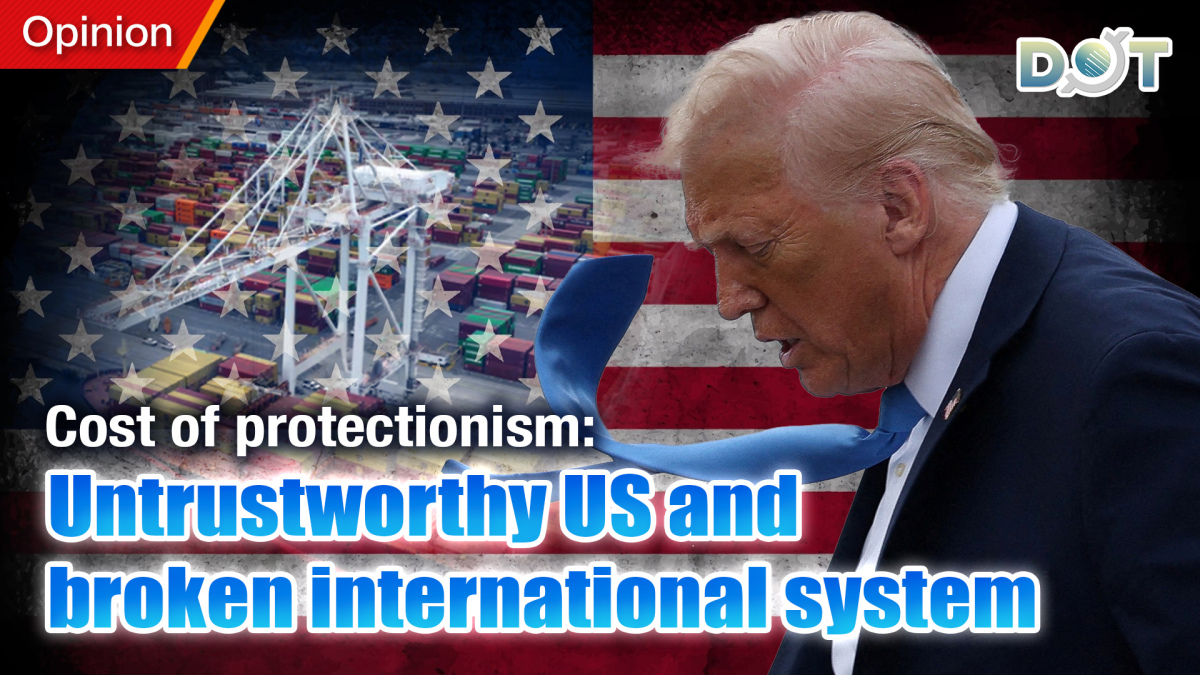
When U.S. President Donald Trump steps back onto the world stage in 2025, few would have predicted the scale of his latest move. Unlike his first term in the pre-pandemic era, this administration faces far fewer constraints with a Republican controlled Congress, a pro-conservative Supreme Court, and a cabinet composed of firm loyalists, allowing him to pursue policies that many once considered unthinkable.
His latest “Liberation Day tariffs” policy, as an example, has become more than a tool to “rebalance” U.S. trade relations with the world; it has also become an impactful symbol that challenges the post-World War II global system of free trade and globalization, a system largely constructed and led by the U.S.
The “Liberation Day tariffs” policy is both simple and widely influential: it imposes a minimum duty of 10% on nearly all imports into the U.S., combined with harsher rates for countries that Trump deems to be engaging in unfair trade practices with the U.S. Notably, the so-called “reciprocal” tariffs on Chinese products have surged to 145%, calculated using a formula “invented” by his administration. Although a 90-day pause has been granted to most countries – excluding China – the damage to the global economic system is already obvious. It marks a disappointing departure of the United States from the multilateral, rules-based order that has underpinned global trade and prosperity for decades.
Supporters of the tariffs argue that they are necessary to force U.S. trading partners back to the negotiating table, a so-called “art of negotiation” that Trump’s followers tout as evidence of his strong leadership. Trump even humiliated countries that were willing to make deals with the United States, referring to them as “ass-kissers.” Yet this rationale is deeply flawed, and his reactions are both disrespectful and undiplomatic. Unilateral tariffs, especially at unreasonable rates, tend to provoke retaliatory measures, leading to a tit-for-tat cycle. Prompt counter-tariffs have escalated tensions to unpleasant levels, transforming any potential dialogue into a cycle of brinkmanship. The idea that coercion leads to balanced outcomes ignores the basic principles of reciprocity, compromise, and mutually beneficial negotiations.
Domestically, the “Liberation Day tariffs” policy is not without substantial costs. Although it is enacted in the name of protection, the reality is painful: U.S. consumers and importers bear the costs through higher prices and artificially disrupted supply chains. The price of a panda doll has soared to US$80, and many Chinese products in supermarkets are being sold out before the tariffs are implemented. Ordinary Americans will face higher living costs, and the U.S. economy will endure greater inflationary pressure. Furthermore, the turbulent performance of the stock market has weakened global investors’ confidence, while the surge in Treasury bonds’ long-term interest rates has represented the rare distrust of the U.S. Confidence in the United States and its sovereign credibility is fading. Trump’s aggressive stance may temporarily satisfy the domestic political narrative, but it comes at the expense of American economic stability and long-term prosperity.
Globally, these unilateral tariffs severely undermine the U.S. role, which should be a stabilizer rather than the current position, and erode the mutual trust built over decades with key political allies and business partners. By disrespecting multilateral frameworks and disregarding WTO principles, the Trump administration signals to the world that American self-interest is more important than upholding international rules. Traditional partners in Europe and crucial allies in Asia, such as Japan and South Korea, are reconsidering their dependence on the U.S. and are forced to reevaluate their strategic alignments and trade policies amid growing uncertainty.
From a geopolitical perspective, the tariff policy escalates China-U.S. relations and the broader great power competition, intensifying the situation in what appears to be a calculated strategic move. However, this approach comes at a significant cost to America’s interests, exemplifying the Chinese saying “殺敵一千, 自傷八百” – inflicting considerable self-harm while attacking the adversary. China demonstrates significant strategic and material strengths based on the lessons from Trump’s first term. A divided global landscape is emerging, with the United States leading one camp under “America First” and China leading another, advocating free trade and globalization. This division leaves many nations struggling to maintain balance and exacerbates global instability. For some Western scholars and observers, it may be disappointing to witness the U.S. decline. Still, they are also heartened to see that China is assuming its responsibility to commit to a system that has benefited not only China but the entire world.
All in all, Trump’s tariff strategy is an unwise approach that undermines the principles of globalization, diplomacy, free trade, and international cooperation. Instead of doubling down on harmful tariff wars, U.S. policymakers must urgently shift toward multilateral dialogue and collaborative trade agreements, as China is currently pursuing. Such an approach would safeguard global interests, restore trust worldwide, and reinforce the global economic order that has underpinned decades of shared prosperity and peace. The future depends on fostering balanced policies rooted in mutual benefit rather than unilateral dominance. At this critical moment in the long period of peace we have enjoyed over recent decades, we do not need wars – whether economic, diplomatic, or military – but rather the pursuit of peace and prosperity. Many more issues require global efforts to tackle, from poverty elimination to climate change that may threaten all of humanity. It is time for the U.S. to wake up and do the right thing.
The views do not necessarily reflect those of DotDotNews.
The author is an MPhil candidate in International Relations at the School of Governance and Policy Science at the Chinese University of Hong Kong.
中文版(AI翻译):
观点 | 保护主义的代价:不可信的美国与破碎的国际体系
当美国总统唐纳德·特朗普于2025年重返国际舞台时,几乎没有人预测到他最新动作的规模。相比于他的第一任期——那个疫情前的时代,这届政府面临的掣肘少了许多:共和党控制的国会、亲保守派的最高法院以及一个由铁杆支持者组成的内阁,使得他可以推行许多人曾认为不可思议的政策。
以他的最新“解放日关税”政策为例,这不单单是一个用来“重新平衡”美国与世界贸易关系的工具;其影响还超越经济层面,成为一个有力的象征,挑战了二战后由美国主导构建的自由贸易与全球化体系。
“解放日关税”政策非常简单却影响广泛:它对进入美国的几乎所有进口商品征收最低10%的关税,并对特朗普认为从事“不公平贸易”的国家实施更高的关税。特别地,中国商品的所谓“互惠”关税已经飙升至145%,依据他政府“发明”的公式计算。此外,除了中国以外的大多数国家被给予了90天的缓冲期,但对全球经济体系的损害已经显而易见。这标志着美国令人失望地告别了支撑全球贸易和繁荣的多边规则体系。
关税政策的支持者认为,关税是迫使美国贸易伙伴重新回到谈判桌前的必要手段,这种所谓的“谈判艺术”被特朗普追随者吹捧为其强大领导力的证明。然而,这一理由是十分站不住脚的,他的一些反应既缺乏尊重,也不符合外交礼仪。单边关税,尤其是那些不合理的高关税,通常会引发报复性措施,导致针锋相对的循环。迅速实施的反制关税已经使紧张局势恶化到令人不悦的程度,将任何潜在的对话转变为边缘政策博弈的循环。认为胁迫能够带来平衡的结果忽略了 reciprocity(互惠)、妥协和互利谈判的基本原则。
在国内,“解放日关税”政策并非没有显著成本。尽管关税政策以保护的名义实施,其真正结果却痛苦不堪:美国消费者与进口商通过更高的价格和人为扰乱的供应链承担了成本。一只熊猫玩偶的价格飙升至80美元,而许多超市中的中国商品在关税实施之前被抢购一空。普通美国人将面临更高的生活成本,而美国经济将承受更大的通胀压力。此外,股市的不稳定表现削弱了全球投资者的信心,而美国国债长期利率的上升则反映了对美国主权信用的罕见质疑。对美国和其主权信用的信心正在减弱。特朗普的强硬立场可能暂时满足国内的政治叙事,但代价却是美国经济的稳定性和长期繁荣。
在全球方面,这些单边关税严重削弱了美国应有的稳定者角色,侵蚀了与关键政治盟友和商业伙伴数十年间建立的互信。通过对多边框架的蔑视以及无视世贸组织原则,特朗普政府向世界发出了一个信号:美国的自身利益比维护国际规则更为重要。欧洲的传统合作伙伴以及亚洲重要盟友如日本和韩国正在重新审视对美国的依赖,并被迫在日益不确定的时代中重新评估自己的战略对齐与贸易政策。
从地缘政治角度来看,这项关税政策加剧了中美关系的紧张以及更广泛的大国竞争,似乎是一项经过精心计算的战略举动。然而,这一策略对美国利益造成了显著损失,正如中国一句谚语所说:“杀敌一千,自伤八百”——攻击敌人时也对自己造成了伤害。基于特朗普第一任期的教训,中国表现出显著的战略和物质实力。全球正逐渐分裂成两个阵营:美国领导的“美国优先”阵营和中国领导的倡导自由贸易与全球化的阵营。这种分裂使许多国家难以维持平衡,并加剧了全球动荡。一些西方学者和观察人士对美国的衰退感到失望,但他们也对中国采取责任并承诺一个中国不仅受益且惠及全球的体系感到欣慰。
总体而言,特朗普的关税战略是一种不明智的做法,它破坏了全球化、外交自由贸易与国际合作的原则。美国政策制定者必须紧急转向多边对话和协作性贸易协议,如中国所采取的措施。这种方式将保护全球利益,恢复世界范围内的信任,强化支撑数十年共享繁荣与和平的全球经济秩序。未来取决于促进以互惠为基础的政策,而非单边主导。在我们过去几十年享受的长期和平关键时刻,我们需要的不再是战争——无论是经济、外交还是军事战争,而是追求和平与繁荣。全球还有许多问题需要国际共同努力解决,从消除贫困到威胁全人类的气候变化。这是美国醒来并做正确事情的时候了。
本文观点不代表DotDotNews立场。
作者是香港中文大学政务与政策科学学院哲学硕士研究生。

 Chen Chaofan Frank
You must be logged in to post a comment.